taper-bush
Application Engineering
Food-processing equipment adds hygiene and washdown requirements to ordinary power-transmission selection. The important distinction is where the bushing sits in relation to the product zone. A bushing inside a guarded, non-contact drive enclosure has a different material and cleaning requirement from a component exposed to splash or direct product contact.
Do not label a standard industrial bushing “food grade” simply because it is installed on a food machine. The machine designer or plant hygiene standard should define the material and surface requirements for the specific zone; the bushing then has to satisfy those requirements while still matching the shaft and hub.
Contact, splash and non-product zones
| Zone | Selection question | Typical approach |
|---|---|---|
| Direct product-contact area | Can the bushing or its lubricant/contact surface touch food? | Use only materials and finishes approved for that machine/food-contact requirement. |
| Splash / washdown area | Will water, cleaner or product reach the connection? | Review corrosion resistance, sealing/guarding and cleanability. |
| Non-product drive area | Is the bushing isolated behind guards or structure? | Standard industrial material may be suitable if the machine design permits it. |
Material options need a machine-level review
The QD data notes that stainless-steel QD bushings are available as made-to-order configurations. Stainless steel can also be considered for other custom designs, but alloy grade, surface finish and cleaning chemical exposure should be specified. Do not assume one stainless grade is automatically suitable for every caustic or chloride environment.
Typical food and packaging drive points
Conveyor sprockets, bottling-line sheaves, mixer drives and packaging-machine pulleys can all use taper-style bushings. The machine layout determines whether Taper Lock, QD, Split Taper or another connection is present. For replacement, identify the hub family before asking for a stainless version of the existing bore.
Cleaning and maintenance
Design the maintenance process so food residue and wash water are not trapped around inaccessible joints. During shutdown, inspect corrosion, fastener condition and shaft/keyway wear. If a drive is dismantled for hygiene work, protect cleaned taper and shaft surfaces from damage before reassembly.
RFQ information for food-processing equipment
Provide the machine area, whether the bushing is in contact/splash/non-contact service, cleaning chemicals or washdown description, existing family/model, bore, keyway and mating hub. If a specific regulatory or customer material standard applies to the machine, attach that requirement rather than asking for “food grade” without a definition.
Frequently asked questions
Are standard cast-iron bushings automatically suitable for food equipment?
Suitability depends on the zone and the machine hygiene specification. Non-contact drive areas may differ from splash or direct-contact areas.
Can I request a stainless QD bushing?
The technical data notes made-to-order stainless QD bushings. Specify the exact QD family, bore/keyway, environment and required stainless grade or standard.
Related products and resources
Need help with a real application?
Send the model, shaft diameter, keyway or drawing so the enquiry can be checked against the correct bushing family.
Application Engineering
Mining equipment combines the conditions that expose weak shaft-to-hub decisions quickly: shock, reversing loads, abrasive dust, large rotating components and long maintenance intervals between planned shutdowns. A bushing is a small item compared with a crusher sheave or conveyor pulley, but a mismatch at that interface can stop the entire drive.
Heavy-duty selection begins with the installed hub, shaft size and actual torque. The EP taper-lock range extends from EP-6050 through EP-120100 for large shafts, while QD and Split Taper families may appear on other mine-drive components. The machine geometry decides the family before the load decides the size.
Mining equipment that uses taper bushings
| Equipment | Typical connection | Primary checks |
|---|---|---|
| Crusher | Large V-belt sheave or pulley hub on main/auxiliary shaft. | Shock duty, shaft fit, hub taper and fastener access. |
| Vibrating screen | Pulley or eccentric-drive hub. | Vibration history, fretting, shaft/keyway condition. |
| Overland conveyor | Head/tail pulley and drive sheaves. | Large shaft size, continuous/reversing torque and contamination. |
| Mine hoist / elevator | Sprocket, drum or sheave connection. | Interface family, duty, guarding and critical-service inspection. |
Shock and reversing loads change the review
A steady running torque does not describe a crusher start or a loaded conveyor reversal. Use the drive’s design torque and service factor at the bushing shaft, not only motor power. If an old bushing shows hammered keys, cracked material or repeated movement, record the failure pattern before increasing size; the shaft or hub may be the real limitation.
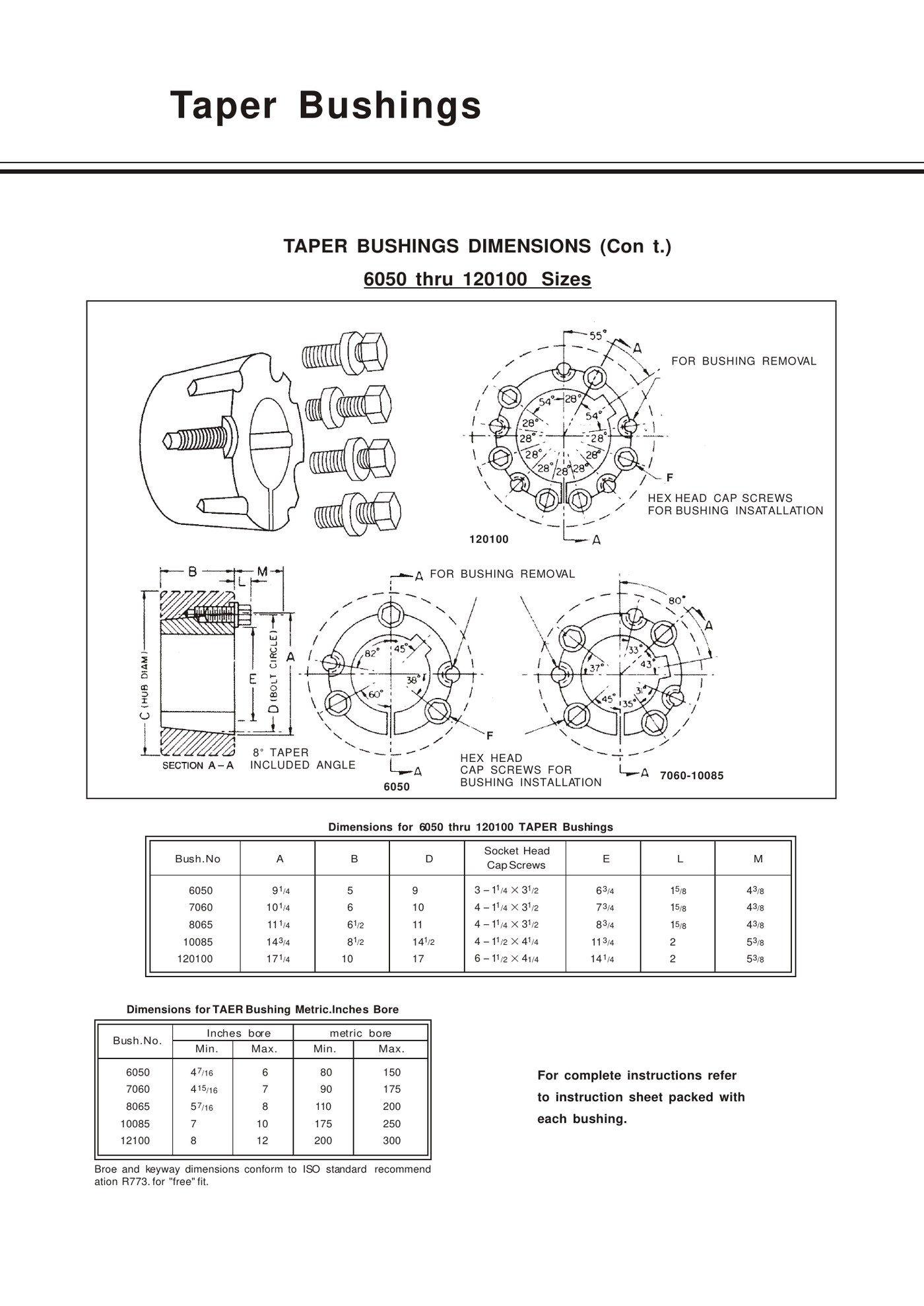
Large EP taper-lock families
| EP model | A (in) | B (in) | D (in) | Listed bore range |
|---|---|---|---|---|
| EP-6050 | 9 1/4 | 5 | 9 | 4 7/16 to 6 in |
| EP-7060 | 10 1/4 | 6 | 10 | 4 15/16 to 7 in |
| EP-8065 | 11 1/4 | 6 1/2 | 11 | 5 7/16 to 8 in |
| EP-10085 | 14 3/4 | 8 1/2 | 14 1/2 | 7 to 10 in |
| EP-120100 | 17 1/4 | 10 | 17 | 8 to 12 in |
Dust, corrosion and maintenance access
Abrasive dust can hide fretting and damage threads during disassembly. Clean exposed screw positions before applying tools and protect the joint during service. On outdoor or wet equipment, include corrosion exposure in the material/finish review. Large components also need planned lifting and safe support before the taper is released.
Critical spare planning
For remote equipment, keep an identification record for each critical connection: EP model, bore, keyway, fastener set, hub or pulley reference and photographs. A spare with the correct shaft bore but the wrong outside taper is not a usable spare. Where one drive has multiple bushing families, label storage by machine position as well as by model.
Frequently asked questions
Should every mining conveyor use EP-6050 or larger?
No. Select the family and size from the actual shaft, hub, torque and duty. A smaller drive may correctly use a smaller series.
What is the first thing to check after repeated bushing movement?
Inspect the shaft, keyway, hub taper, fasteners and alignment before assuming the bushing itself is undersized.
Related products and resources
Need help with a real application?
Send the model, shaft diameter, keyway or drawing so the enquiry can be checked against the correct bushing family.
Application Engineering
Fans and blowers make small alignment errors visible. A sheave that is offset or a hub that runs eccentrically can add vibration that travels through bearings, belts and the air-handling structure. The bushing is only one part of that system, but it must locate the rotating component consistently and remain serviceable.
HVAC equipment uses several connection types: small motor and fan sheaves may use compact Taper Lock sizes, industrial blowers may use larger Taper Lock or XT systems, and some service-intensive drives use QD components. Identify the hub family before selecting the shaft bore.
Fan systems that use taper bushings
| Fan/drive | Typical connection | Selection concern |
|---|---|---|
| Air-handling unit | Motor and fan sheaves on V-belt drive. | Compact bore, axial alignment and service access. |
| Industrial centrifugal fan | Large sheave or impeller hub. | Concentricity, balance and shaft/hub geometry. |
| Axial fan auxiliary drive | Pulley or hub on motor/fan shaft. | Speed, balance and guarding. |
| Large blower | XT, Split Taper or heavy taper-bore hub depending on design. | Hub family, weight and installation access. |
Why balance and concentricity matter
The bushing should seat on a sound shaft and in an undamaged hub so the rotating component remains concentric. After assembly, verify the fan or sheave according to the equipment balance/alignment procedure. A bushing is not a balancing device, and changing bushing family will not correct an eccentric or damaged wheel.
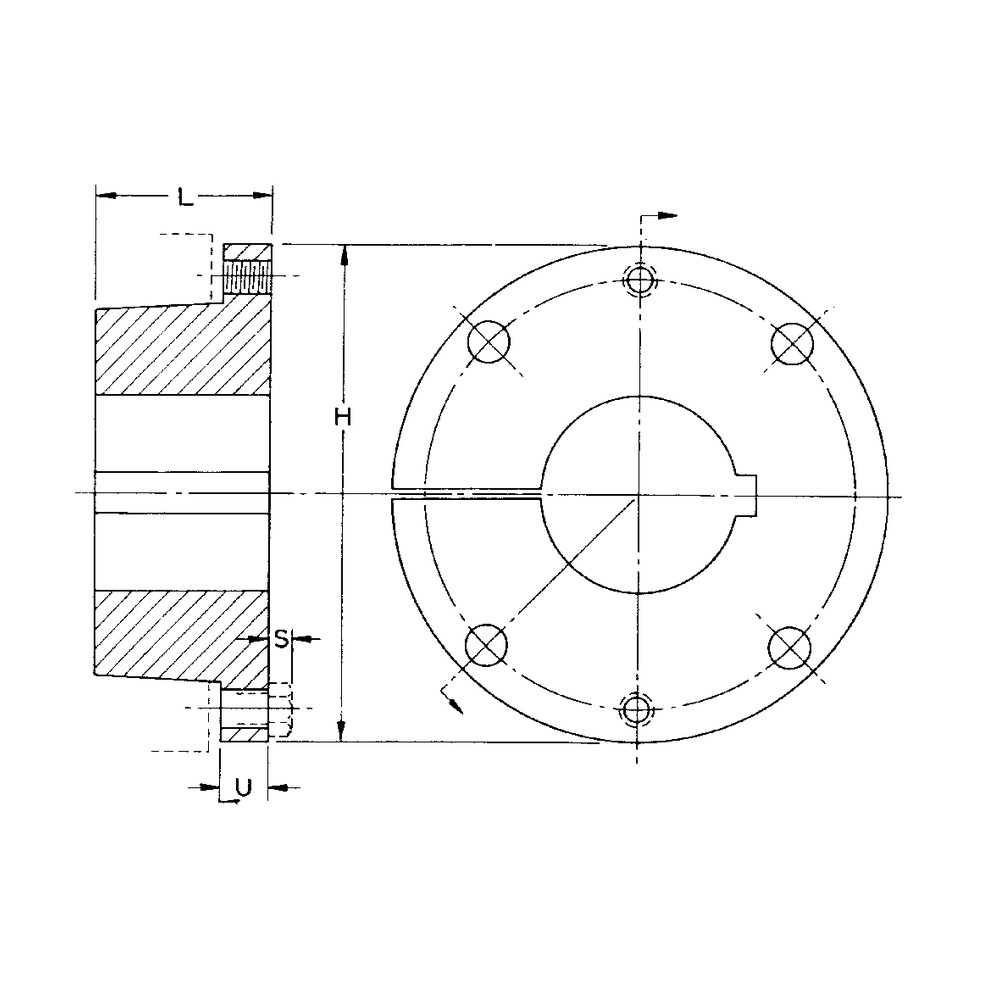
Series choices follow the hub and shaft
EP-1008 through EP-2517 are compact references often seen on smaller shafts; EP-2012 through EP-4040 cover larger taper-lock connections; XT models extend into large flanged hub systems. Use those ranges only as navigation. The actual selection needs shaft bore, hub interface and duty data.
Maintenance access in HVAC equipment
Air handlers can place sheaves close to frames, guards or bearing supports. Make sure the tightening and removal holes remain accessible after installation. When replacing belts during scheduled service, inspect the bushing for fretting and the shaft for keyway wear rather than disturbing a sound connection unnecessarily.
Information to send with a fan-drive enquiry
Provide fan type, shaft diameter, motor power and speed, sheave or hub reference, existing bushing model, keyway and a photo showing available access. If vibration is the reason for replacement, include alignment or balance findings so the new part is not expected to solve a system problem by itself.
Frequently asked questions
Does a taper bushing guarantee a balanced fan?
No. The bushing can support concentric mounting when the shaft and hub are correct, but the complete rotating assembly still needs the required balance and alignment.
Can I replace an XT fan hub with QD?
Only by redesigning or replacing the mating hub/component. XT and QD are different interfaces.
Related products and resources
Need help with a real application?
Send the model, shaft diameter, keyway or drawing so the enquiry can be checked against the correct bushing family.
Application Engineering
Pump drives are sensitive to alignment because the bushing sits in a system that also includes bearings, seals, belts or couplings. A bushing can be dimensionally correct and still produce trouble if the pulley is offset, the shaft is worn or the hub is not running concentrically.
For a belt-driven centrifugal pump, identify both the motor-side and pump-side sheave interfaces. For a flexible coupling hub, confirm that the hub itself is designed for the selected bushing family. Then review speed, torque, environment and service access.
Pump drive arrangements that use bushings
| Arrangement | Where the bushing is used | What to verify |
|---|---|---|
| V-belt drive | Motor sheave and/or pump sheave. | Shaft bore, sheave taper, belt alignment and speed. |
| Flexible coupling hub | Coupling half mounted on motor or pump shaft. | Hub family, bore/keyway and axial position. |
| Chain drive | Sprocket mounted to an auxiliary pump shaft. | Sprocket hub interface, torque and guarding. |
| Blower/compressor auxiliary | Pulley or coupling hub. | Cyclic load, speed and alignment. |
Alignment is a system requirement
Misalignment adds belt side-load, vibration and bearing stress. After the bushing is seated, check sheave faces or coupling alignment using the machine procedure. Do not use the bushing to pull a mispositioned sheave into line; set the component at the correct axial location before final tightening.
Choosing a family by the installed hub
Compact and mid-size Taper Lock models are common references for many pump sheaves, while larger shafts can move into EP-3535 and above. Split Taper or QD may be present on other pump-drive components. The family name should follow the hub geometry, not an assumption that one style is inherently more precise.
Operating environment
Process pumps may operate near chemicals, washdown or outdoor moisture. Specify the exposure in the RFQ when material or finish could matter. For food or hygienic equipment, distinguish whether the bushing is in a product-contact zone or a protected non-contact drive area; the machine hygiene design controls the material requirement.
Pump-drive RFQ checklist
Provide pump and motor shaft diameters, hub/sheave or coupling reference, speed at the shaft, transmitted power or torque, keyway, environment and any alignment issue observed in the old assembly. If replacing a failed bushing, include photos of fretting or shaft damage so the root cause can be considered.
Frequently asked questions
Can I choose a Split Taper bushing just to improve pump alignment?
Only if the mating component is designed for that family. Alignment depends on the complete hub, shaft and drive setup, not the bushing label alone.
What measurements are most important for a pump replacement?
Shaft bore, keyway, bushing/hub family, sheave or coupling geometry, speed and observed alignment condition.
Related products and resources
Need help with a real application?
Send the model, shaft diameter, keyway or drawing so the enquiry can be checked against the correct bushing family.
Application Engineering
Agricultural equipment asks a lot from small mechanical connections. Dust works into joints, moisture promotes corrosion, shock loads appear when crop flow changes, and seasonal maintenance often means parts are removed and reinstalled after months of storage. A bushing that is easy to identify and service is valuable only when it also matches the shaft and hub correctly.
The product family varies by machine: auger sprockets may use compact Taper Lock sizes, baler drives may use QD components, and larger harvest equipment can move into heavier numbered series. Start from the installed hub and duty rather than standardizing every agricultural drive on one bushing type.
Agricultural drive points to inspect
| Equipment | Typical bushing location | Main concern |
|---|---|---|
| Grain auger / elevator | Drive sprocket, pulley or gearbox output connection. | Dust, field replacement and keyed-shaft wear. |
| Combine harvester | Cleaning fan, elevator, feeder or auxiliary drive. | Vibration, variable crop load and multiple drive points. |
| Round or square baler | Sprocket and belt-drive sheaves. | Shock, seasonal service and access behind guards. |
| PTO-driven implement | Intermediate shafts and pulley/sprocket hubs. | Reversing/impact duty and shaft alignment. |
| Irrigation pump | Motor/pump sheave or coupling hub. | Alignment, moisture and corrosion. |
Dust, moisture and fertilizer exposure
Clean the shaft and taper carefully during seasonal reassembly; abrasive dust trapped in the joint can change seating and scratch the surfaces. If the machine is stored outdoors or exposed to fertilizer, inspect for corrosion at the end of the season and protect the connection in accordance with the machine maintenance plan.
Choosing the material and family
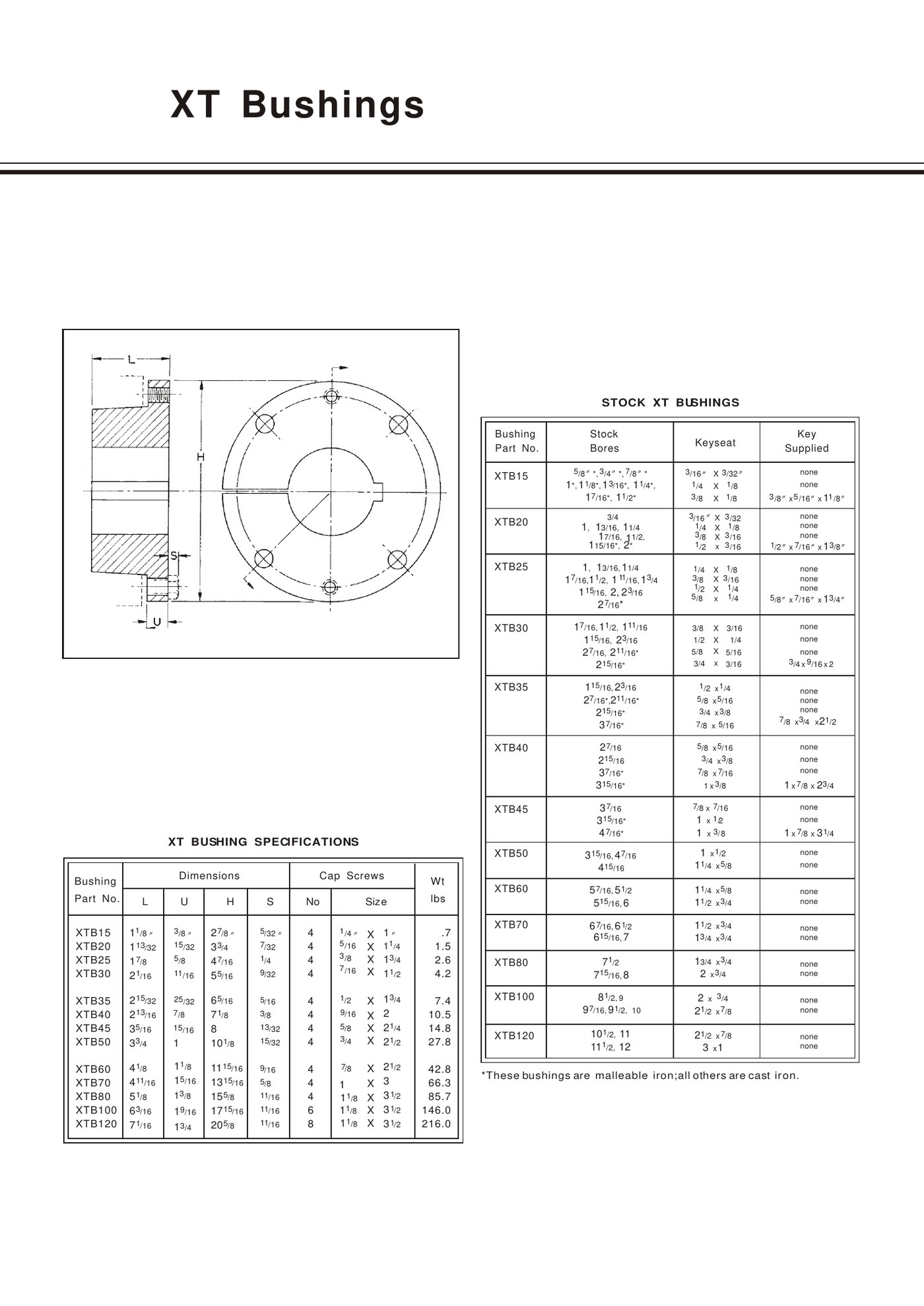
Use the material specified for the selected EP configuration as the baseline. The XT table marks some stock-bore entries as malleable iron, while other entries are cast iron. Do not switch material solely because the machine is agricultural; shock level, corrosion, hub design and exact model matter.
Seasonal maintenance protocol
Before storage, inspect for fretting, loose keys and damaged fasteners. Before the next season, measure any shaft that showed movement, clean the taper, verify model/bore/keyway and align the driven component. Keeping a photo and model list for each critical drive makes field replacement much faster than searching by machine name alone.
RFQ information for an agricultural OEM or distributor
For repeat supply, provide the machine model, drive location, EP or existing bushing reference, shaft bore, keyway standard, mating component and annual quantity. For a field replacement, photographs of the bushing marking and hub are often more useful than a long description of the machine.
Frequently asked questions
What bushing series is best for a grain auger?
There is no single series for every auger. Match the shaft and sprocket/pulley hub first, then verify torque and environmental duty.
Should outdoor equipment always use stainless steel bushings?
Not automatically. Review corrosion exposure, material compatibility and the exact product family before changing material.
Related products and resources
Need help with a real application?
Send the model, shaft diameter, keyway or drawing so the enquiry can be checked against the correct bushing family.
Application Engineering
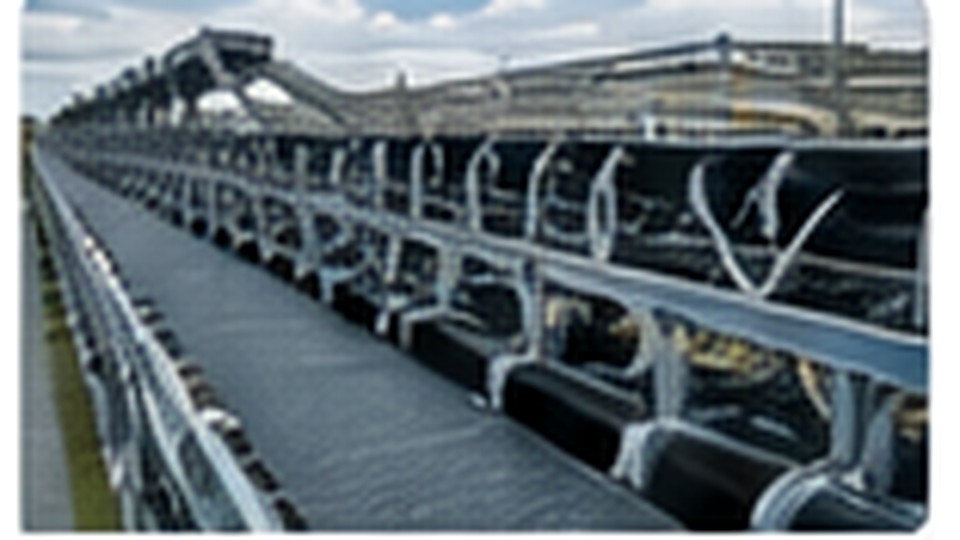
Conveyor drives expose bushings to a combination of steady torque, repeated starts, contamination and maintenance access constraints. The same conveyor line may use small bushings on roller drives and very large bushings on a head pulley. Selection has to follow the actual drive point rather than the conveyor name alone.
For an existing conveyor, begin with the pulley or sprocket hub and identify its bushing family. For a new drive, define shaft diameter, transmitted torque, start/stop duty, keyway and available installation space before choosing an EP series.
Conveyor drive points that use taper bushings
| Drive point | Bushing role | Selection emphasis |
|---|---|---|
| Belt conveyor head or tail pulley | Mounts pulley hub or sheave to the shaft. | Torque, shaft size, hub geometry and alignment. |
| Screw conveyor drive | Connects pulley, sprocket or coupling hub. | Service access, contamination and replacement frequency. |
| Bucket elevator head shaft | Mounts sprocket or belt-drive component. | Load reversals, dust and critical spare planning. |
| Roller conveyor | Mounts small sprockets or pulleys. | Compact size, repeatable assembly and bore consistency. |
Duty and environment change the decision
A continuous conveyor is not automatically easier than an intermittent one. Frequent starts can increase cyclic loading; reversing drives can hammer a loose key; abrasive dust can hide fretting; washdown can introduce corrosion. Use the drive torque at the bushing shaft, then review contamination protection and inspection access.
Series starting points by physical scale
Compact EP-1008 through EP-1615 families are common starting references for smaller shafts; EP-2012 through EP-3535 cover larger connections; EP-4040 and above enter heavier pulley and hub sizes. These ranges are not horsepower ratings. Confirm the actual torque capacity and mating hub for the specific conveyor.
Installation notes for conveyor service
Set pulley and sprocket alignment before the taper is fully seated. After maintenance, check guards and belt/chain tracking before loading the conveyor. If the line has a history of repeated bushing movement, inspect the shaft and hub instead of simply increasing tightening force.
What to include in a conveyor RFQ
Send the shaft diameter, bushing model if known, pulley/sprocket or hub reference, keyway, drive power and speed at the relevant shaft, start/stop or reversing duty, environment and quantity. A photo of the complete drive helps confirm service access and the correct family.
Frequently asked questions
Can I choose a conveyor bushing from motor horsepower alone?
No. Use torque at the actual bushing shaft and confirm the hub, shaft size, duty and service factor.
Should mining conveyors use the largest bushing available?
No. Size the connection to the actual shaft/hub geometry and duty; larger outside diameter by itself is not a selection method.
Related products and resources
Need help with a real application?
Send the model, shaft diameter, keyway or drawing so the enquiry can be checked against the correct bushing family.