Mining & Quarrying Application
Review crusher, screen and conveyor selection context.
Application Engineering
Mining equipment combines the conditions that expose weak shaft-to-hub decisions quickly: shock, reversing loads, abrasive dust, large rotating components and long maintenance intervals between planned shutdowns. A bushing is a small item compared with a crusher sheave or conveyor pulley, but a mismatch at that interface can stop the entire drive.
Heavy-duty selection begins with the installed hub, shaft size and actual torque. The EP taper-lock range extends from EP-6050 through EP-120100 for large shafts, while QD and Split Taper families may appear on other mine-drive components. The machine geometry decides the family before the load decides the size.
| Equipment | Typical connection | Primary checks |
|---|---|---|
| Crusher | Large V-belt sheave or pulley hub on main/auxiliary shaft. | Shock duty, shaft fit, hub taper and fastener access. |
| Vibrating screen | Pulley or eccentric-drive hub. | Vibration history, fretting, shaft/keyway condition. |
| Overland conveyor | Head/tail pulley and drive sheaves. | Large shaft size, continuous/reversing torque and contamination. |
| Mine hoist / elevator | Sprocket, drum or sheave connection. | Interface family, duty, guarding and critical-service inspection. |
A steady running torque does not describe a crusher start or a loaded conveyor reversal. Use the drive’s design torque and service factor at the bushing shaft, not only motor power. If an old bushing shows hammered keys, cracked material or repeated movement, record the failure pattern before increasing size; the shaft or hub may be the real limitation.
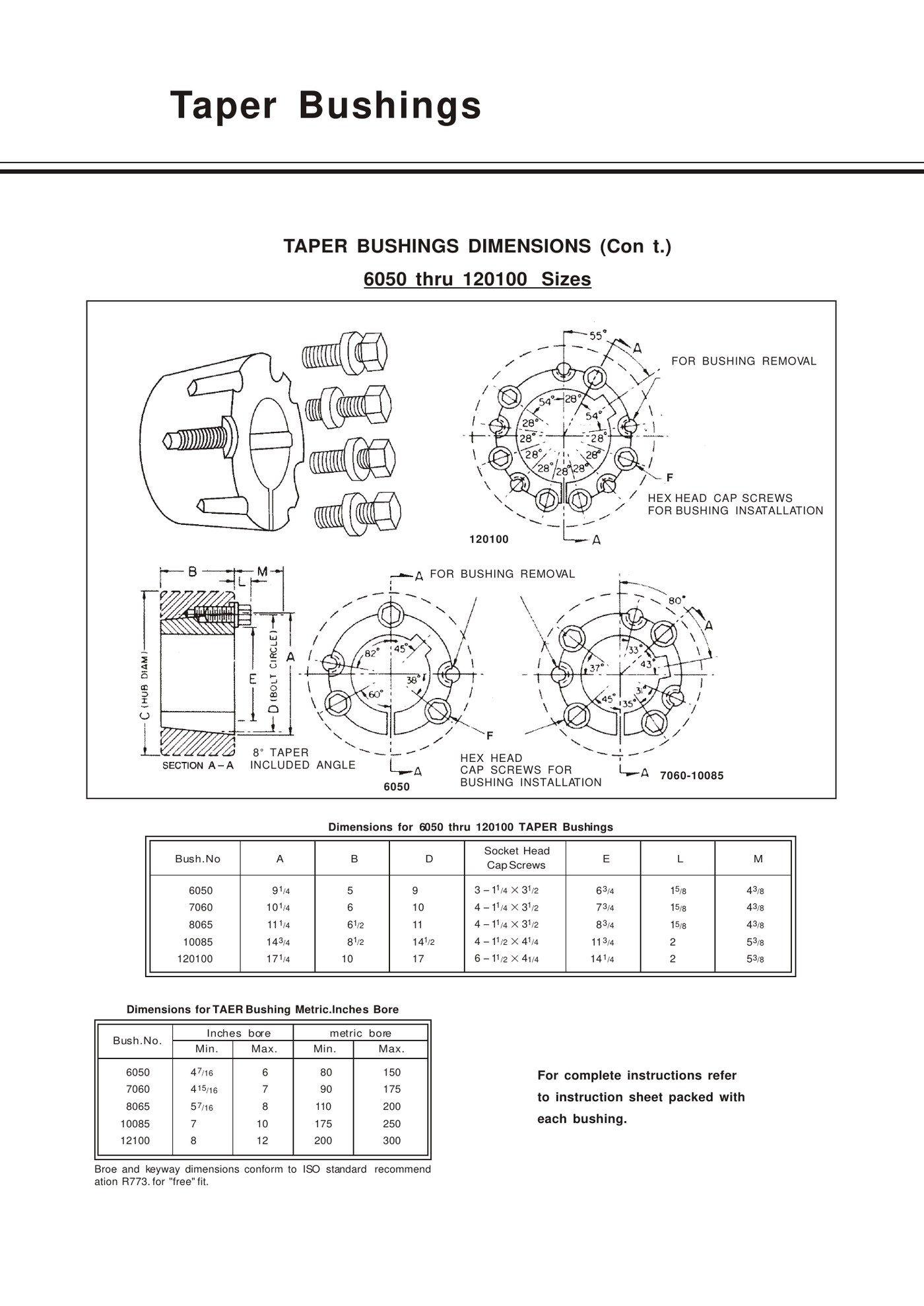
| EP model | A (in) | B (in) | D (in) | Listed bore range |
|---|---|---|---|---|
| EP-6050 | 9 1/4 | 5 | 9 | 4 7/16 to 6 in |
| EP-7060 | 10 1/4 | 6 | 10 | 4 15/16 to 7 in |
| EP-8065 | 11 1/4 | 6 1/2 | 11 | 5 7/16 to 8 in |
| EP-10085 | 14 3/4 | 8 1/2 | 14 1/2 | 7 to 10 in |
| EP-120100 | 17 1/4 | 10 | 17 | 8 to 12 in |
Abrasive dust can hide fretting and damage threads during disassembly. Clean exposed screw positions before applying tools and protect the joint during service. On outdoor or wet equipment, include corrosion exposure in the material/finish review. Large components also need planned lifting and safe support before the taper is released.
For remote equipment, keep an identification record for each critical connection: EP model, bore, keyway, fastener set, hub or pulley reference and photographs. A spare with the correct shaft bore but the wrong outside taper is not a usable spare. Where one drive has multiple bushing families, label storage by machine position as well as by model.
No. Select the family and size from the actual shaft, hub, torque and duty. A smaller drive may correctly use a smaller series.
Inspect the shaft, keyway, hub taper, fasteners and alignment before assuming the bushing itself is undersized.
Send the model, shaft diameter, keyway or drawing so the enquiry can be checked against the correct bushing family.