taper-bush
Technical Knowledge
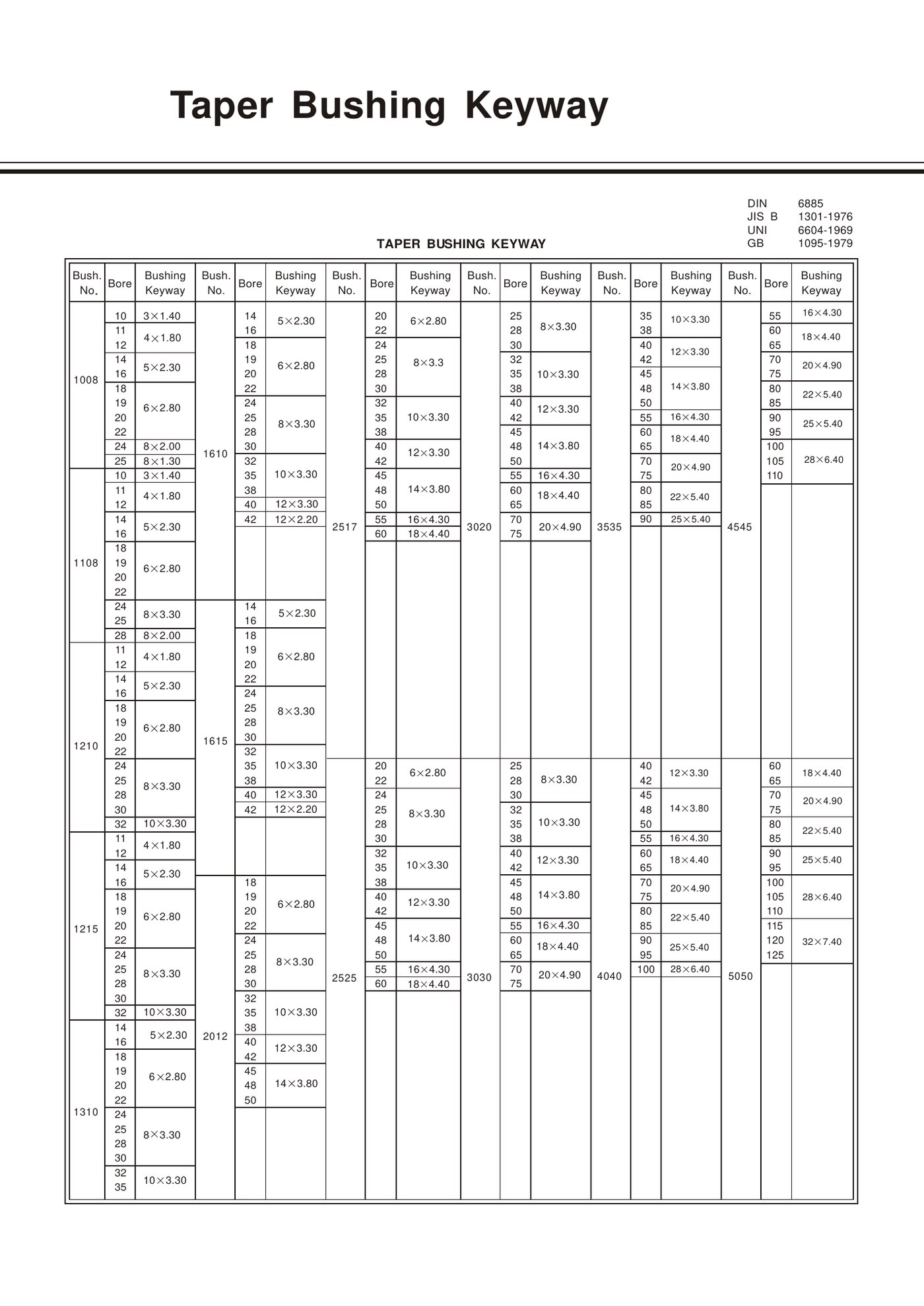
Metric-bore taper bushings are common in machines designed around millimetre shaft sizes, but “metric bore” is only the first part of the specification. The keyway convention, shaft tolerance, mating hub and exact bushing series still have to agree. A 40 mm shaft in a DIN-designed gearbox may not use the same key geometry as an imported machine with a different standard.
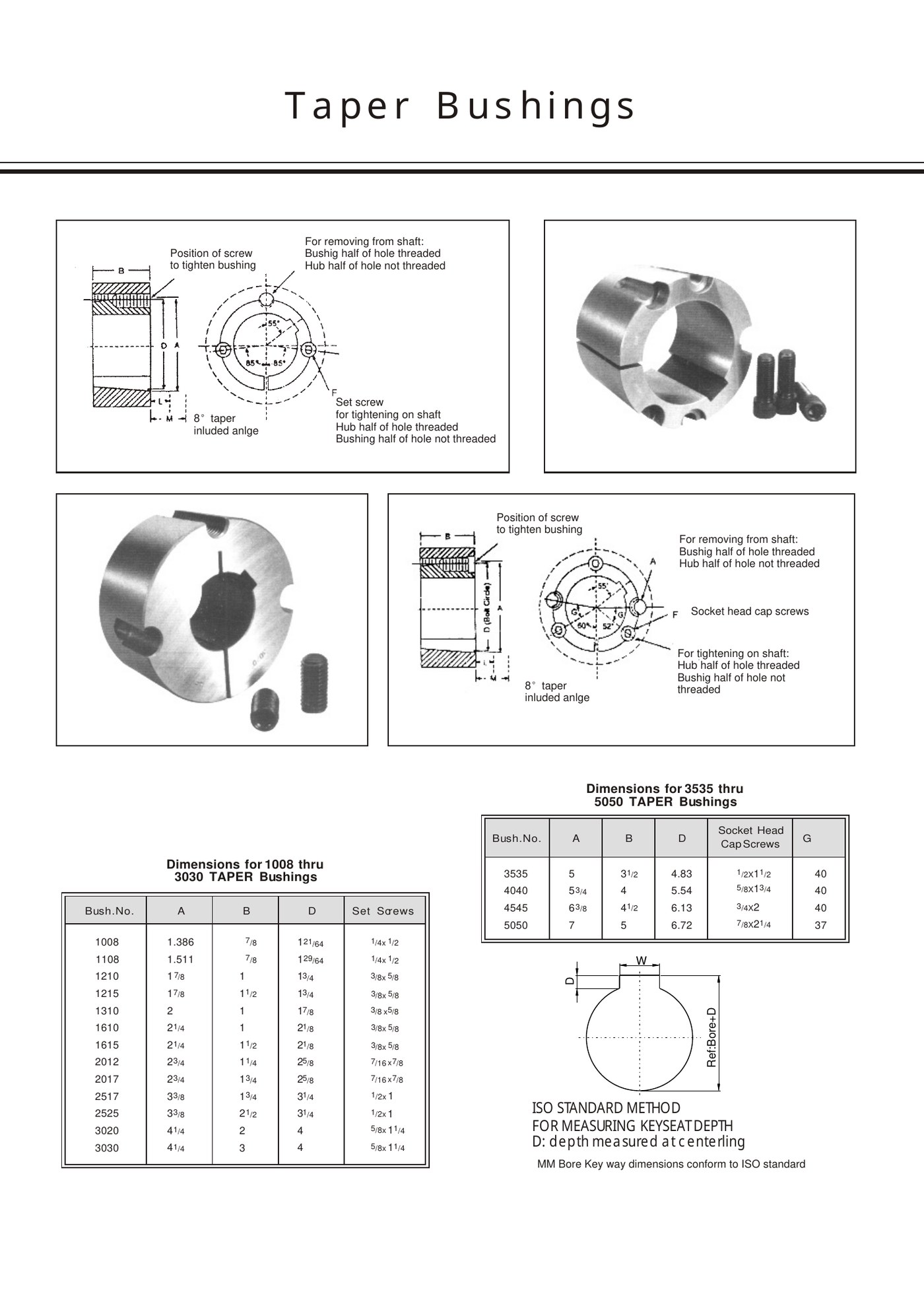
The EP technical tables include metric keyway dimensions tied to DIN 6885 and JIS B 1301-1976 references and show an ISO-style centerline method for measuring keyseat depth. That information is useful when converting an old inch-based maintenance record into a precise metric RFQ.
Where metric bores appear
Metric bores are relevant in European, Japanese and many globally supplied machines. They also appear in replacement work where an inch-family bushing is machined or stocked with a metric shaft bore. Do not let the product family name decide the units; read the actual bore marking or measure the shaft.
DIN 6885 and JIS keyway references
| RFQ item | Example entry | Reason |
|---|---|---|
| Bushing model | EP-2517 | Fixes the outside taper and fastener family. |
| Bore | 45 mm | Defines the shaft interface in metric units. |
| Keyway standard | DIN 6885 | Defines the key/keyseat convention rather than leaving it implicit. |
| Mating component | Pulley / sprocket model or drawing | Confirms the taper-bore interface belongs to the same family. |
| Quantity | Required pieces | Supports a production or maintenance quotation. |
Understanding centerline keyseat depth
The metric drawing expresses keyseat depth with reference to the bore centerline. That is different from casually measuring down from the surface of a bore with a caliper. When checking an unknown part, measure the key width and the shaft/keyseat geometry and compare them with the chosen standard rather than relying on one depth measurement.
Nominal bore is not the whole fit specification
A nominal 50 mm bore tells you the target shaft size, not every tolerance or surface-condition requirement. Inspect the shaft for wear, plating, corrosion or repair work that may have changed its effective diameter. If the machine drawing calls out a shaft fit or tolerance class, include that information in the enquiry rather than asking for “50 mm” alone.
Ordering a metric bore from EVER POWER
Send the EP series or existing marking, shaft diameter in mm, required keyway standard, mating hub or pulley reference and a drawing when available. If the original machine uses a non-standard key or multiple keys, provide the actual dimensions instead of forcing the requirement into a DIN label.
Frequently asked questions
Can I order an EP taper bushing with a metric shaft bore?
Metric bore configurations are part of the technical range; confirm the exact EP model, mm bore and keyway requirement for the order.
Should I assume DIN 6885 for every metric shaft?
No. Imported and legacy machines may use JIS or another keyway convention. Check the drawing or measure the key/keyseat.
Related products and resources
Need help with a real application?
Send the model, shaft diameter, keyway or drawing so the enquiry can be checked against the correct bushing family.