Technical Knowledge
Taper Bushing Keyway Standards Explained: USAS vs DIN vs JIS vs BS
Technical Knowledge
A bushing can have the correct outside taper and still be wrong for the shaft if the keyway standard is mismatched. That is why global replacement work needs more than a model number: the shaft diameter, key/keyway dimensions and the convention used on the original machine must be confirmed together.
The EP taper-bushing technical data includes metric keyway references tied to DIN 6885 and JIS B 1301-1976, and it also includes a USAS B17.1-1967 keyway table. British-origin equipment may use BS 46 conventions. These references should be treated as dimensional systems, not as blanket product-certification claims.
What the keyway does
The key transfers torque through matching slots in the shaft and bushing or hub. Width, depth and fit determine whether the key seats properly. If the key is too high, it can prevent the bushing bore from gripping as intended; if it is too loose or too shallow, load can concentrate and hammer the keyway.
Four standards you may encounter
| Standard/reference | Common context | RFQ instruction |
|---|---|---|
| USAS B17.1-1967 / ASME B17.1 reference | North American inch-based keys and keyseats. | State the inch shaft diameter and the USAS/ASME keyway requirement. |
| DIN 6885 | German and European metric parallel-key applications. | State the shaft diameter in mm and DIN 6885. |
| JIS B 1301-1976 | Japanese-origin metric machinery. | State the bore in mm and JIS B 1301 when matching existing equipment. |
| BS 46 | British/Commonwealth legacy machinery. | Provide the shaft/key dimensions or BS reference from the machine drawing. |
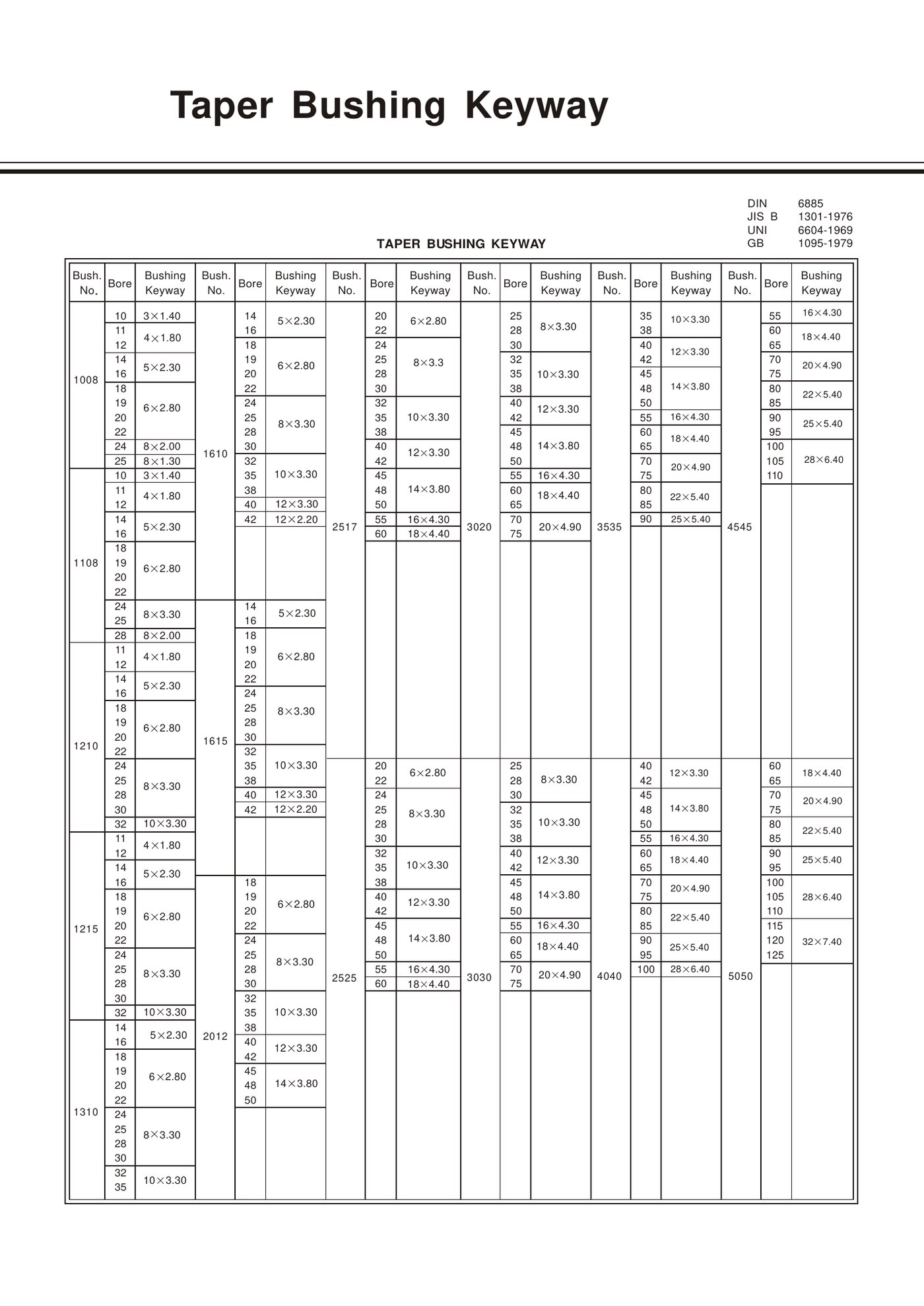
Metric keyseat depth is measured differently
The metric drawing notes an ISO-style method in which keyseat depth is referenced at the bore centerline. That is a useful reminder that a dimension labelled “depth” may not be directly comparable across different drafting systems. When reverse-engineering a worn bushing, measure the key itself and the shaft keyseat as well as the bushing bore.
Standard vs shallow keyway in QD bushings
The QD technical sheet shows standard and shallow keyway options for different bores. A shallow keyway is not simply a machining tolerance variation; it is a distinct configuration that must match the shaft/key arrangement. Include “standard” or “shallow” in the RFQ when the existing QD part is being replaced.
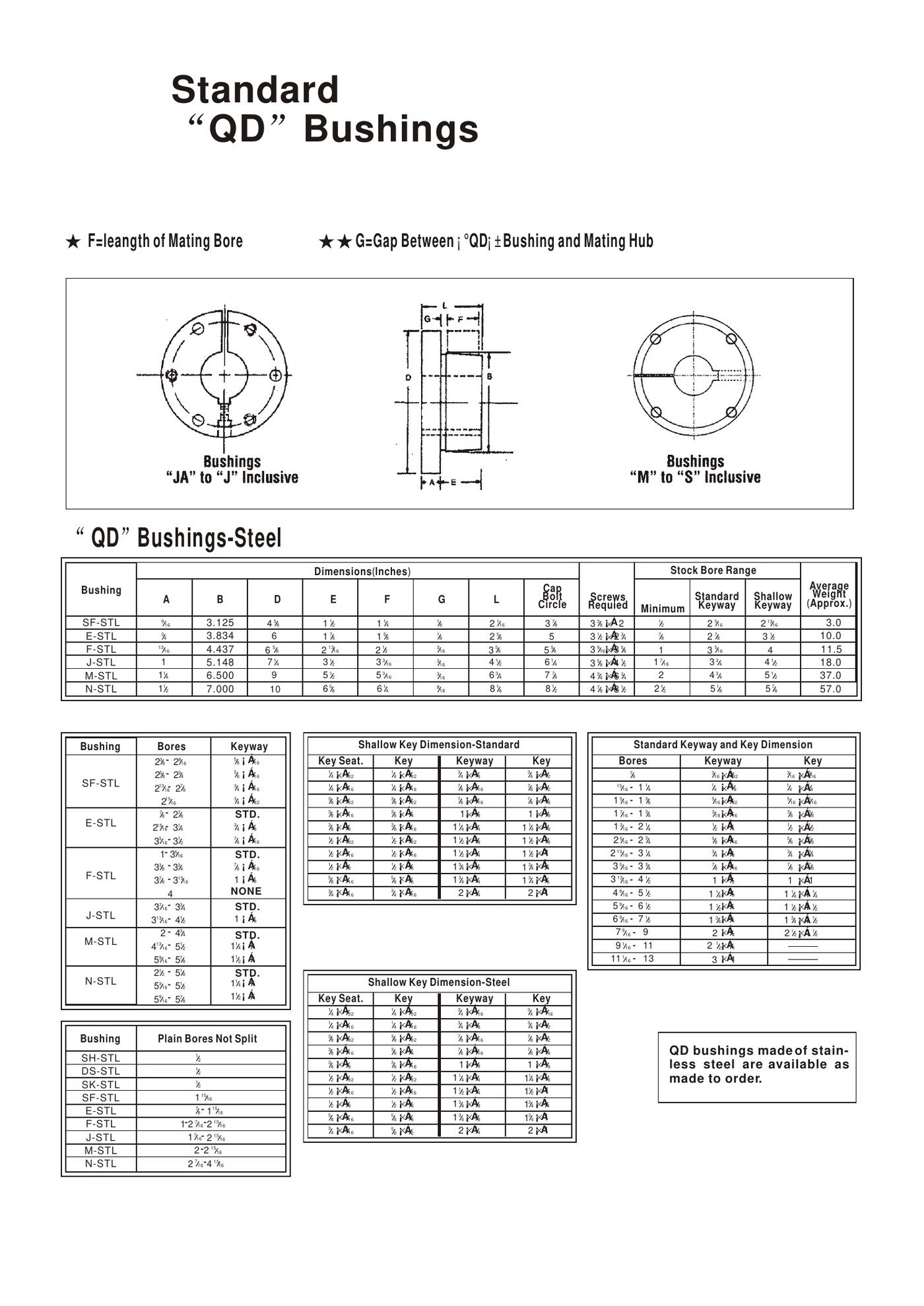
How to specify the keyway when ordering
A useful RFQ line is concise: “EP-2517, 45 mm bore, DIN 6885 keyway” or “EP-J-STL, 2 in bore, standard USAS/ASME keyway,” followed by a drawing when the machine is unusual. If you do not know the standard, send the shaft diameter plus measured key width and depth instead of guessing from country of origin.
Frequently asked questions
Does the country where the machine is installed determine the keyway standard?
Not necessarily. Imported and legacy equipment may retain the standard used by the original machine design. Measure or check the drawing rather than assuming from location.
Can I order by shaft diameter only?
No. The keyway standard or measured key dimensions are also needed when the shaft uses a keyed connection.
Related products and resources
Need help with a real application?
Send the model, shaft diameter, keyway or drawing so the enquiry can be checked against the correct bushing family.