Product Selection
Taper Lock Bushing Replacement Guide: How to Find Compatible Alternatives
Product Selection
Replacement work becomes difficult when the original bushing is corroded, the model stamp is half missing or the machine has been modified over many years. The temptation is to match outside diameter and buy something that looks close. That approach ignores the taper and hub interface, which is exactly the part that must match.
A robust cross-reference starts with identity: family, model, dimensions, shaft bore, keyway and fasteners. Once those agree, material and service conditions can be checked. If any of the interface dimensions remain uncertain, treat the candidate as unconfirmed until the hub or drawing is measured.
Read the marking before measuring
Clean the exposed face carefully and photograph any letters or numbers before removal. Model codes can identify whether you are looking at a numbered Taper Lock family, a lettered QD family, an XTB model or a Split Taper type. Even a partial code can save time when combined with screw count and bore.
Measure the dimensions that identify the family
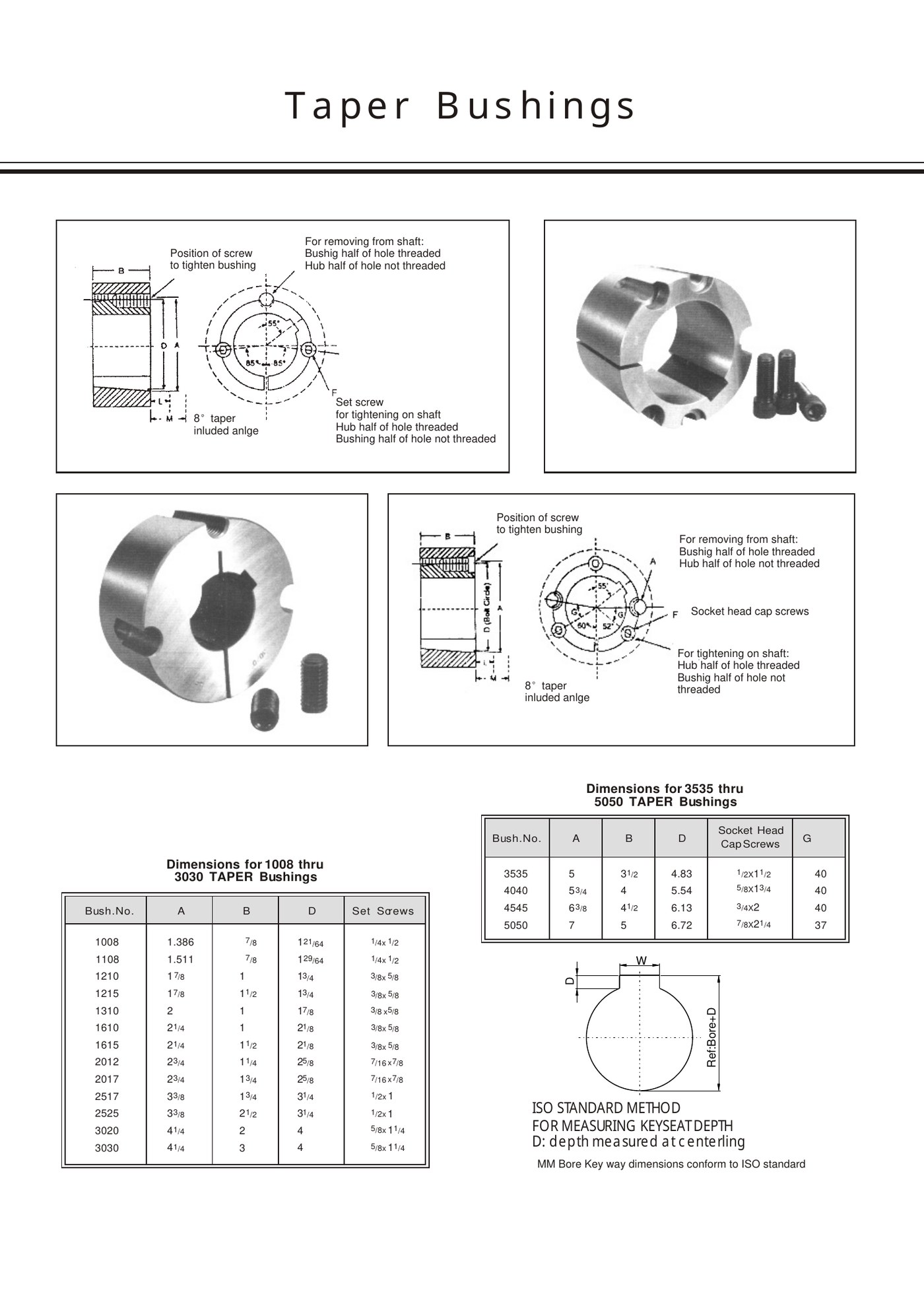
| Measurement | Why it matters |
|---|---|
| Shaft bore | Confirms the actual shaft interface and unit. |
| A / outside or flange reference | Narrows the bushing family. |
| B / axial width | Separates nearby models that share similar outside diameter. |
| D or body diameter | Confirms the matching taper/hub geometry. |
| Fastener size and count | Strong clue to model scale and family. |
| Key width/depth | Confirms the shaft keyway configuration. |
Use dimensional cross-reference, not brand assumption
A replacement claim should be based on measured dimensions and the mating component rather than a brand name alone. If a third-party part number is supplied, use it as an identification clue, then verify the EP candidate against the actual interface. Similar naming conventions do not prove direct interchangeability.
What to check before installing the replacement
Inspect the hub taper, shaft and keyway after the old bushing is removed. Fretting, galling or a worn keyseat may explain why the old part failed. Confirm the new fasteners match the required thread and length, and make sure the installation/removal holes are accessible in the assembled machine.
When a drawing or sample is the fastest route
For an obsolete or modified machine, send the old bushing, a dimensioned sketch or clear photographs with a scale. The goal is to establish the interface rather than to guess an “equivalent.” This is especially important when the installed component has been bored, welded or repaired in the field.
Frequently asked questions
Can I replace a bushing from the shaft bore alone?
No. The outside taper and mating hub family must also match, along with the keyway and fastener arrangement.
What if the original brand and part number are known?
Use them as identification information, then verify dimensions and the mating component before confirming an EP replacement.
Related products and resources
Need help with a real application?
Send the model, shaft diameter, keyway or drawing so the enquiry can be checked against the correct bushing family.