Application Engineering
Taper Bushings for Agricultural Machinery: A Practical Selection Guide
Application Engineering
Agricultural equipment asks a lot from small mechanical connections. Dust works into joints, moisture promotes corrosion, shock loads appear when crop flow changes, and seasonal maintenance often means parts are removed and reinstalled after months of storage. A bushing that is easy to identify and service is valuable only when it also matches the shaft and hub correctly.
The product family varies by machine: auger sprockets may use compact Taper Lock sizes, baler drives may use QD components, and larger harvest equipment can move into heavier numbered series. Start from the installed hub and duty rather than standardizing every agricultural drive on one bushing type.
Agricultural drive points to inspect
| Equipment | Typical bushing location | Main concern |
|---|---|---|
| Grain auger / elevator | Drive sprocket, pulley or gearbox output connection. | Dust, field replacement and keyed-shaft wear. |
| Combine harvester | Cleaning fan, elevator, feeder or auxiliary drive. | Vibration, variable crop load and multiple drive points. |
| Round or square baler | Sprocket and belt-drive sheaves. | Shock, seasonal service and access behind guards. |
| PTO-driven implement | Intermediate shafts and pulley/sprocket hubs. | Reversing/impact duty and shaft alignment. |
| Irrigation pump | Motor/pump sheave or coupling hub. | Alignment, moisture and corrosion. |
Dust, moisture and fertilizer exposure
Clean the shaft and taper carefully during seasonal reassembly; abrasive dust trapped in the joint can change seating and scratch the surfaces. If the machine is stored outdoors or exposed to fertilizer, inspect for corrosion at the end of the season and protect the connection in accordance with the machine maintenance plan.
Choosing the material and family
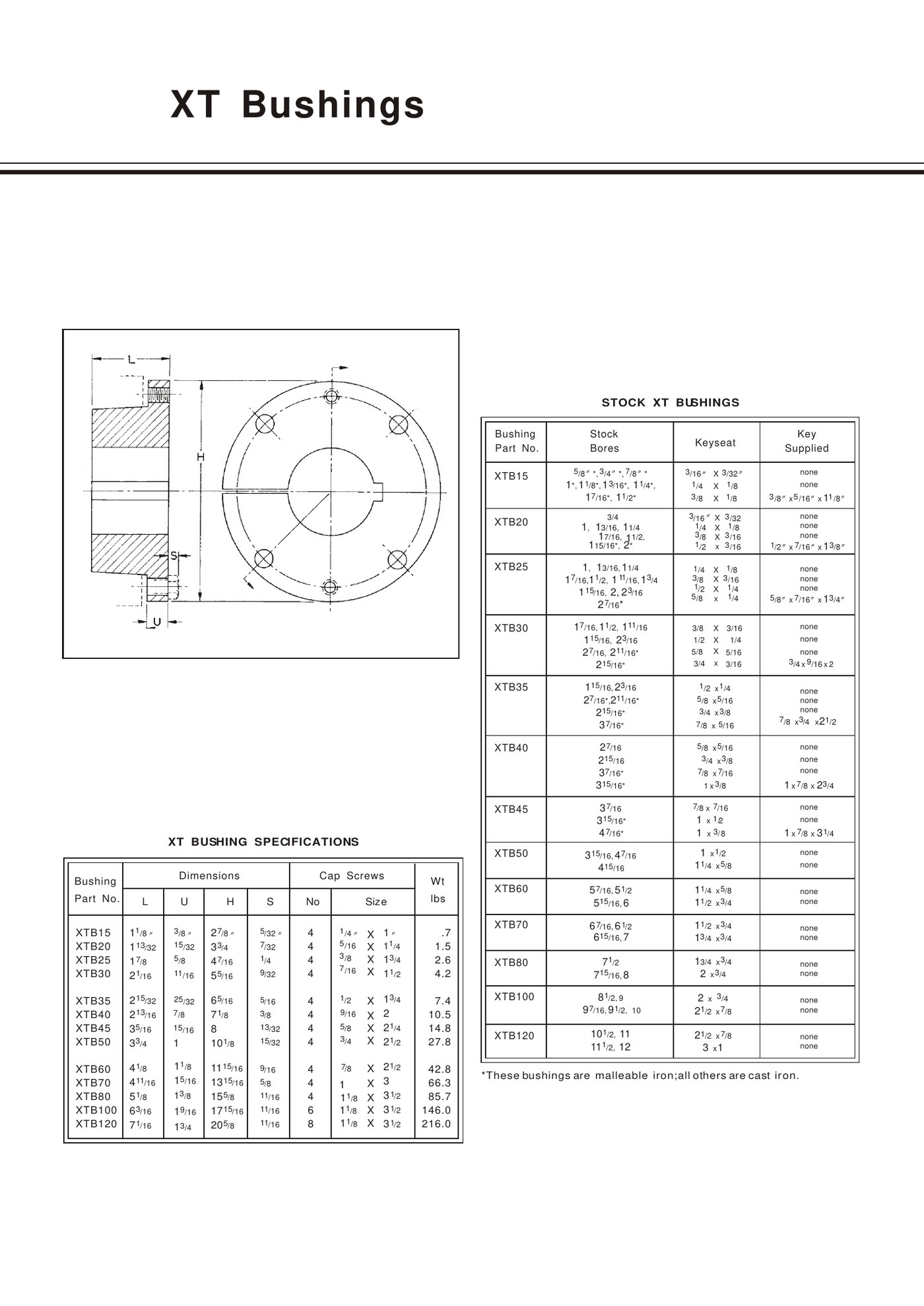
Use the material specified for the selected EP configuration as the baseline. The XT table marks some stock-bore entries as malleable iron, while other entries are cast iron. Do not switch material solely because the machine is agricultural; shock level, corrosion, hub design and exact model matter.
Seasonal maintenance protocol
Before storage, inspect for fretting, loose keys and damaged fasteners. Before the next season, measure any shaft that showed movement, clean the taper, verify model/bore/keyway and align the driven component. Keeping a photo and model list for each critical drive makes field replacement much faster than searching by machine name alone.
RFQ information for an agricultural OEM or distributor
For repeat supply, provide the machine model, drive location, EP or existing bushing reference, shaft bore, keyway standard, mating component and annual quantity. For a field replacement, photographs of the bushing marking and hub are often more useful than a long description of the machine.
Frequently asked questions
What bushing series is best for a grain auger?
There is no single series for every auger. Match the shaft and sprocket/pulley hub first, then verify torque and environmental duty.
Should outdoor equipment always use stainless steel bushings?
Not automatically. Review corrosion exposure, material compatibility and the exact product family before changing material.
Related products and resources
Need help with a real application?
Send the model, shaft diameter, keyway or drawing so the enquiry can be checked against the correct bushing family.