taper-bush
Product Selection
A correct bushing bore starts with a correct shaft measurement. Maintenance records often contain nominal sizes that are useful for purchasing but not enough for diagnosing a worn connection. A shaft stamped “2 in” can have wear, plating, repair material or a tolerance that changes what you actually measure.
The bore also has to belong to the right outside bushing family. Ordering a 50 mm bore in the wrong EP series will not make it fit the existing pulley. Measure the shaft, identify the hub/bushing series and keyway, then state the bore in the original unit.
Stock bore vs custom bore
A stock-bore configuration appears in the product tables for standard purchasing. A custom bore is machined or specified for a requirement outside the listed stock combination or with a special keyway. The RFQ should distinguish the two because the part identification and drawing review can be different.
How to measure the shaft
- Clean a representative length of the shaft before measuring.
- Use an outside micrometer where possible and take readings at more than one angular position.
- Measure near the bushing location, not only at an unworn end of the shaft.
- Record the key width and keyseat condition as well as the diameter.
- Keep inch measurements in inch unless the original design is known to be metric, and vice versa.
Nominal size, tolerance and wear
Nominal shaft size is the design identity; the measured diameter tells you the current condition. If the shaft is materially undersize, tapered, scored or out of round, installing a new bushing may not restore reliable grip. Compare the measurement with the machine drawing or shaft tolerance before treating the bore as a purchasing problem.
Special bore configurations
| Configuration | What to provide |
|---|---|
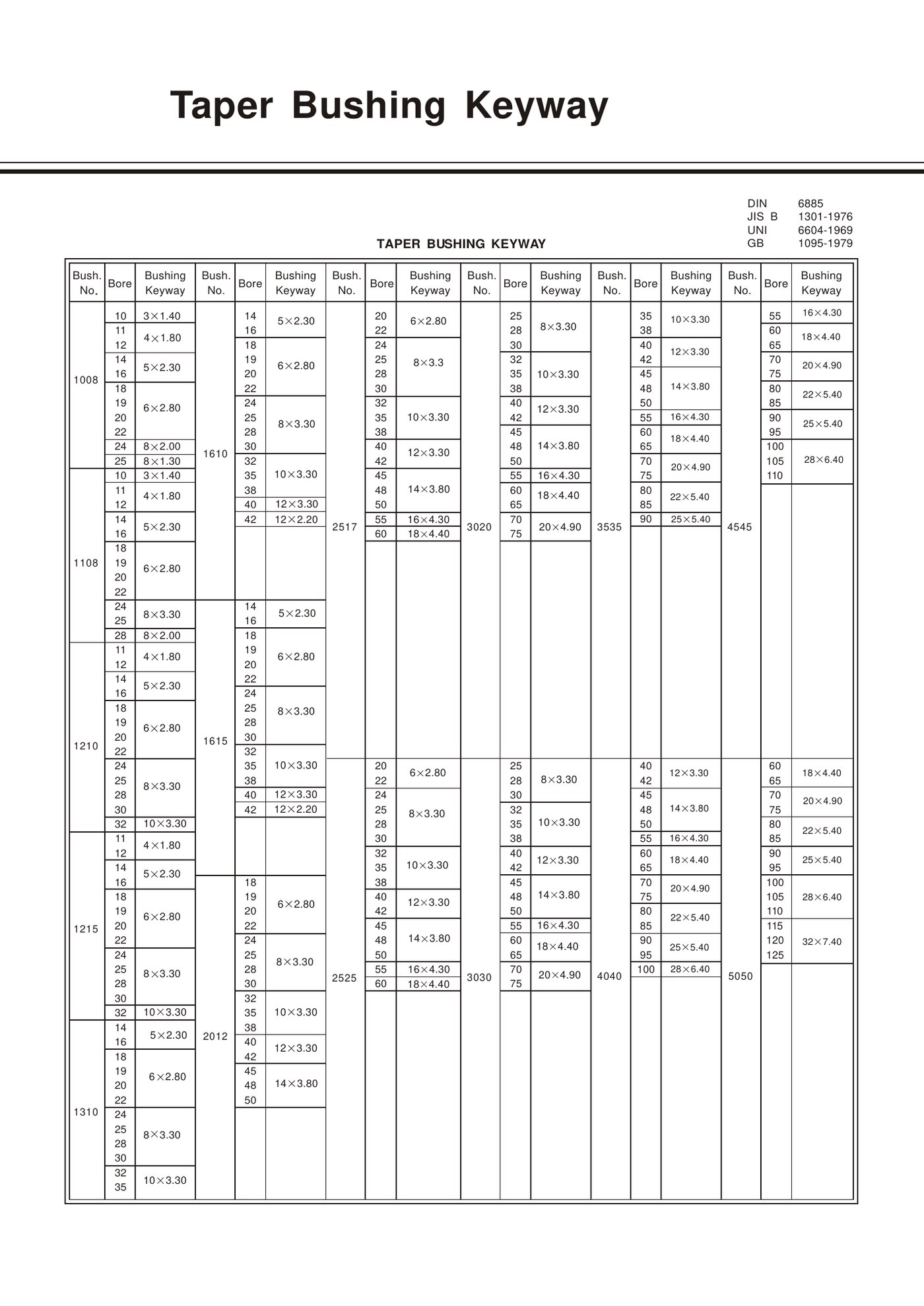
| Metric bore | Exact shaft diameter in mm and the keyway standard. |
| Inch bore | Exact inch size and USAS/ASME or other keyway requirement. |
| No keyway / plain bore | State explicitly that no keyway is required and provide the application drawing. |
| Multiple or special keyways | Provide width, depth, angular position and drawing. |
| Worn-shaft replacement | Provide measured shaft condition; do not simply order an oversized bore without an engineering repair plan. |
How to write the RFQ line
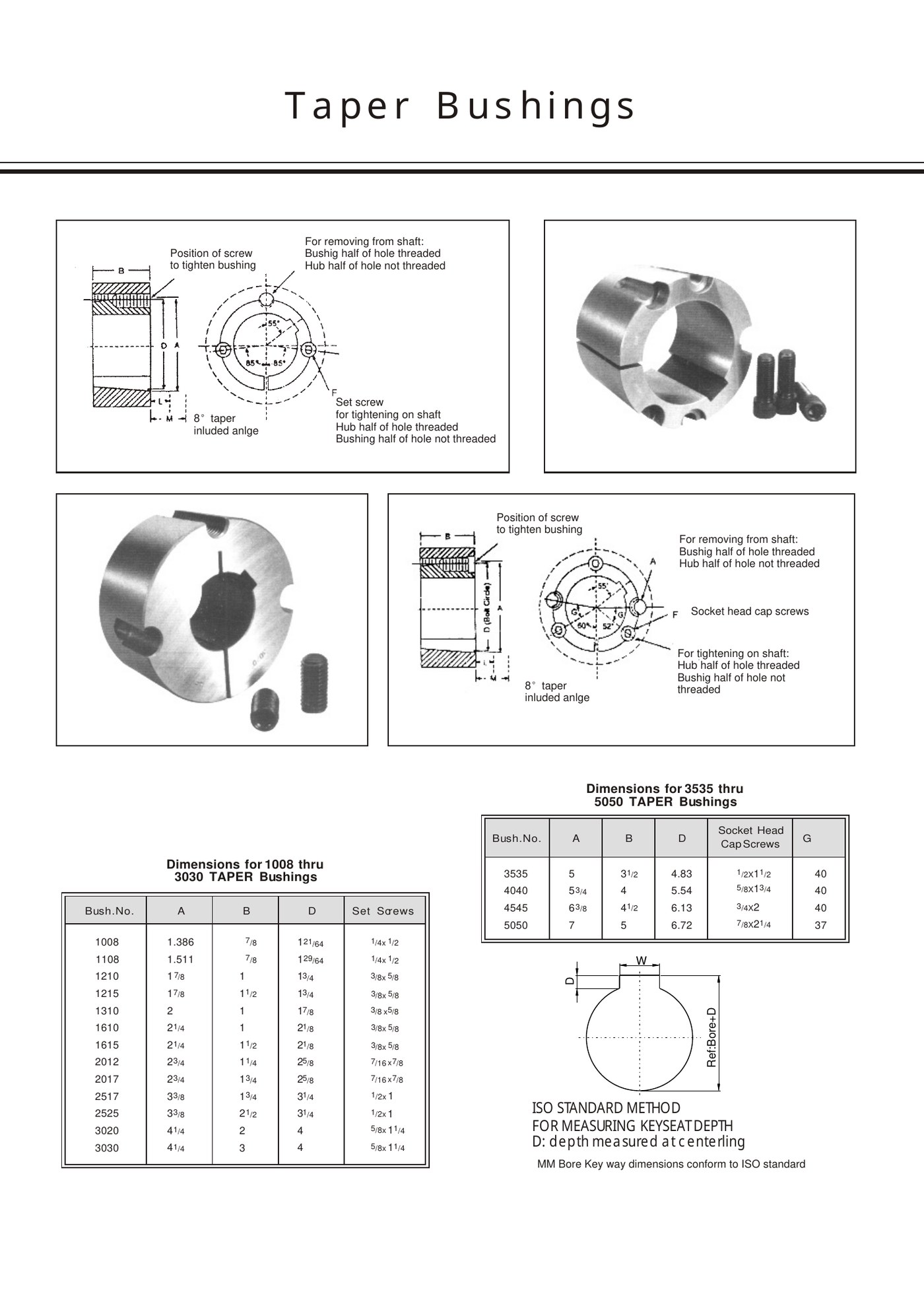
A useful line looks like: “EP-3535 taper bushing, 60 mm bore, DIN 6885 keyway, for existing taper-bore sheave; drawing attached.” If the EP model is unknown, replace it with measured A/B/D dimensions plus photographs of the hub and fastener pattern.
Frequently asked questions
Is a vernier caliper accurate enough for every shaft?
It is useful for identification, but a micrometer is preferred when fit, wear or a close tolerance must be evaluated.
Can I solve a worn shaft by ordering a larger custom bore?
Not automatically. The shaft repair, fit and keyway must be reviewed as a complete mechanical connection.
Related products and resources
Need help with a real application?
Send the model, shaft diameter, keyway or drawing so the enquiry can be checked against the correct bushing family.