Industry Focus
Taper Bushings in Textile Machinery: Applications, Selection and Technical Guide
Industry Focus
Textile machinery often contains many small high-speed drive points rather than a few massive shafts. That shifts attention toward repeatable concentric assembly, low vibration, clean maintenance and precise identification of compact pulleys and sprockets.
The bushing family still follows the hub. Taper Lock, Split Taper or QD can all appear in textile equipment depending on the machine builder and drive component. High speed is a reason to verify the complete rotating assembly, not a reason to assume one bushing family is automatically superior.
Common textile-machine drive points
| Machine area | Connection | What matters most |
|---|---|---|
| Weaving loom main/auxiliary drive | Pulley or sprocket on shaft. | Repeatable alignment and vibration control. |
| Spinning frame | Compact pulley or roller drive hub. | Small bore accuracy and service access. |
| Sizing / finishing machine | Cylinder or conveyor drive component. | Shaft fit, contamination and alignment. |
| Winding equipment | Traverse or auxiliary drive pulley. | High-speed balance and repeatable installation. |
High speed makes assembly errors visible
At higher rotational speed, eccentricity, pulley damage and misalignment produce stronger vibration. The bushing should seat on a clean, sound shaft in an undamaged hub. After installation, follow the machine builder’s balance and alignment requirements for the complete rotating assembly.
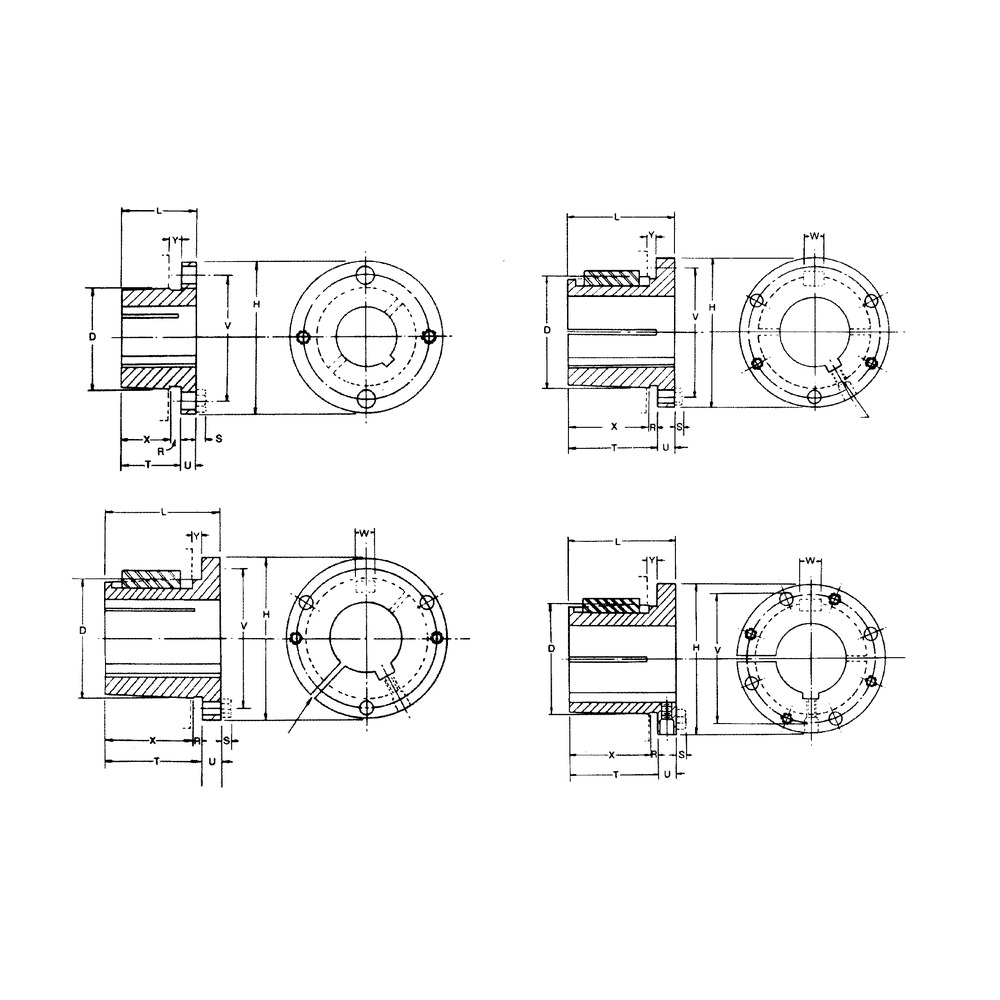
Split Taper and compact Taper Lock options
Split Taper families may be found in precision pulley systems where matching split hubs are already part of the design. Compact EP Taper Lock families are also used where a taper-bore pulley or sprocket is fitted. Do not convert between them without changing or verifying the mating component.
Maintenance for repeatable setup
When a textile line is repeatedly changed over, label bushings and hubs by machine position and model so components are not mixed. Inspect key wear, fastener threads and taper surfaces during scheduled service. If vibration appears after reassembly, check pulley position and balance before blaming the new bushing.
RFQ information
Provide machine type, shaft speed, shaft diameter, bushing/hub model, keyway, pulley or sprocket reference and any balance or vibration requirement from the machine builder. A clear photo of the drive layout helps confirm whether access and hub family have been identified correctly.
Frequently asked questions
Is Split Taper always the best choice for high-speed textile machinery?
No. Use the bushing family designed into the hub and verify the complete rotating assembly for concentricity, balance and alignment.
What should I check when vibration appears after maintenance?
Check pulley/hub seating, shaft condition, key fit, alignment, fastener condition and the rotating component balance.
Related products and resources
Need help with a real application?
Send the model, shaft diameter, keyway or drawing so the enquiry can be checked against the correct bushing family.