Application Engineering
Taper Lock Bushing for Food Processing Equipment: Materials and Selection
Application Engineering
Food-processing equipment adds hygiene and washdown requirements to ordinary power-transmission selection. The important distinction is where the bushing sits in relation to the product zone. A bushing inside a guarded, non-contact drive enclosure has a different material and cleaning requirement from a component exposed to splash or direct product contact.
Do not label a standard industrial bushing “food grade” simply because it is installed on a food machine. The machine designer or plant hygiene standard should define the material and surface requirements for the specific zone; the bushing then has to satisfy those requirements while still matching the shaft and hub.
Contact, splash and non-product zones
| Zone | Selection question | Typical approach |
|---|---|---|
| Direct product-contact area | Can the bushing or its lubricant/contact surface touch food? | Use only materials and finishes approved for that machine/food-contact requirement. |
| Splash / washdown area | Will water, cleaner or product reach the connection? | Review corrosion resistance, sealing/guarding and cleanability. |
| Non-product drive area | Is the bushing isolated behind guards or structure? | Standard industrial material may be suitable if the machine design permits it. |
Material options need a machine-level review
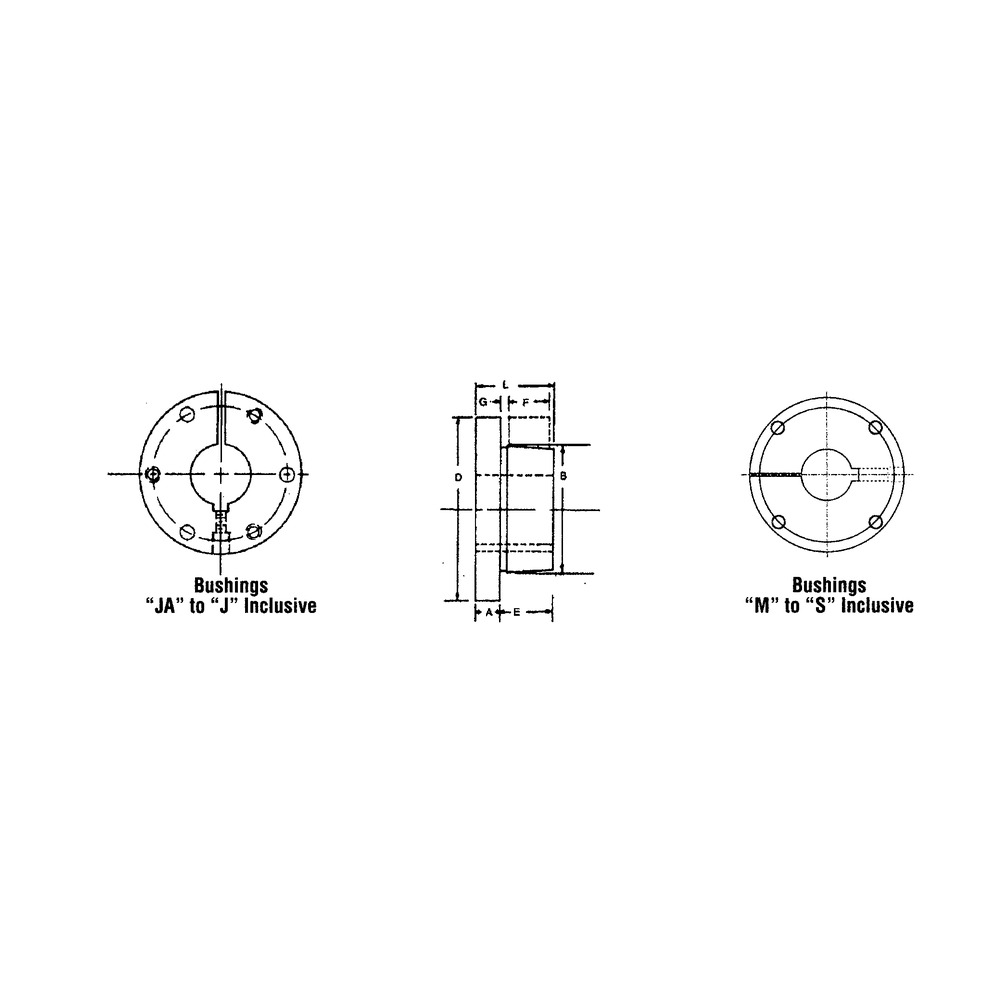
The QD data notes that stainless-steel QD bushings are available as made-to-order configurations. Stainless steel can also be considered for other custom designs, but alloy grade, surface finish and cleaning chemical exposure should be specified. Do not assume one stainless grade is automatically suitable for every caustic or chloride environment.
Typical food and packaging drive points
Conveyor sprockets, bottling-line sheaves, mixer drives and packaging-machine pulleys can all use taper-style bushings. The machine layout determines whether Taper Lock, QD, Split Taper or another connection is present. For replacement, identify the hub family before asking for a stainless version of the existing bore.
Cleaning and maintenance
Design the maintenance process so food residue and wash water are not trapped around inaccessible joints. During shutdown, inspect corrosion, fastener condition and shaft/keyway wear. If a drive is dismantled for hygiene work, protect cleaned taper and shaft surfaces from damage before reassembly.
RFQ information for food-processing equipment
Provide the machine area, whether the bushing is in contact/splash/non-contact service, cleaning chemicals or washdown description, existing family/model, bore, keyway and mating hub. If a specific regulatory or customer material standard applies to the machine, attach that requirement rather than asking for “food grade” without a definition.
Frequently asked questions
Are standard cast-iron bushings automatically suitable for food equipment?
Suitability depends on the zone and the machine hygiene specification. Non-contact drive areas may differ from splash or direct-contact areas.
Can I request a stainless QD bushing?
The technical data notes made-to-order stainless QD bushings. Specify the exact QD family, bore/keyway, environment and required stainless grade or standard.
Related products and resources
Need help with a real application?
Send the model, shaft diameter, keyway or drawing so the enquiry can be checked against the correct bushing family.